
Celebrating twenty-five years of EPCC’s MSc in High Performance Computing
23 June 2026
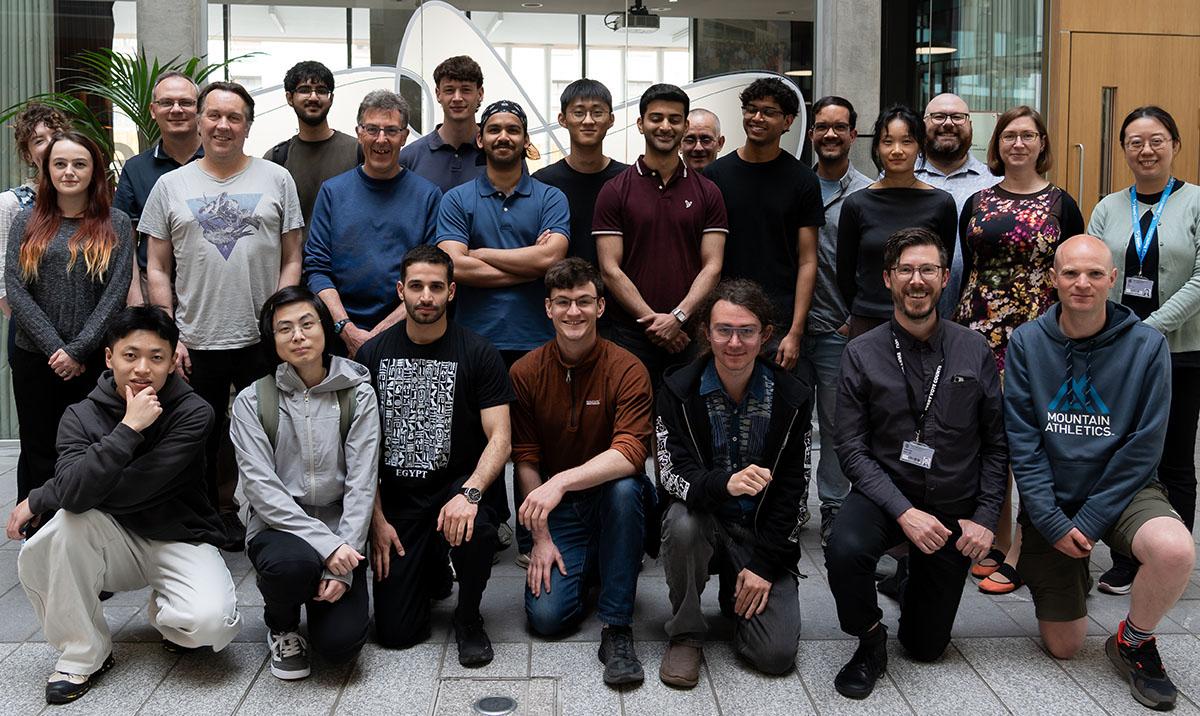
EPCC has long been a highly-regarded provider of training in high performance computing, and launched its first Masters programme with the University of Edinburgh In 2001. This month, EPCC staff – alongside the twenty-fifth cohort of students – stepped out of the classroom to celebrate the twenty-fifth anniversary of the MSc in High Performance Computing.
A quarter century of postgraduate education
Twenty-five years in any context is an impressive amount of time to deliver something. Indeed, the MSc in High Performance Computing is now older than the average student it teaches. However, twenty-five years in terms of computing, and the pace at which technology advances, is staggering. Not only in terms of everyday devices, such as mobile phones, games consoles and home computers, but with supercomputers, too.
When the MSc launched, students were able to work on Lomond, a three-node system with 66 CPUs. Today’s students are frequent users of ARCHER2 which has 5,860 compute nodes and 750,080 CPUs. With a syllabus that has required constant reworking to stay relevant, dedicated teaching staff have carried the MSc through many challenges and changes.
While the technology has advanced since the first run of the programme, the core objective has stayed the same: to teach the next generation of computational experts. Across the last quarter of a century, EPCC has expanded its postgraduate portfolio with the additions of the MSc in HPC with Data Science, various online learning programmes and specialised PhD opportunities. From that handful of students on the first run of the MSc, to the more than 100 students currently enrolled with EPCC today, teaching and training have always been at the heart of EPCC’s identity.

The future of education at EPCC
As EPCC reflects on its history, it is also entering an exciting new chapter of research and innovation. Preparations have begun at EPCC’s computing facility to host the UK’s Next National Supercomputer service. Furthermore, EPCC has recently assumed its role as the EuroHPC and DSTI co-funded UK AI Factory Antenna. These new endeavours will, in turn, allow EPCC to share its knowledge and experience from these projects with future cohorts of students.
These upcoming projects present invaluable opportunities to expand the EPCC curriculum. Plans under consideration include specialised paths for HPC system administrators and a deep dive into the responsible implementation of artificial intelligence in research. Even after twenty-five years, EPCC still has a lot left to teach.