News
HPC-Europa visit report
Tamara Gerber, a PhD student at the institute for Physics of Ice, Climate and Earth at the University of Copenhagen, reports on her research visits to Edinburgh and Newcastle.

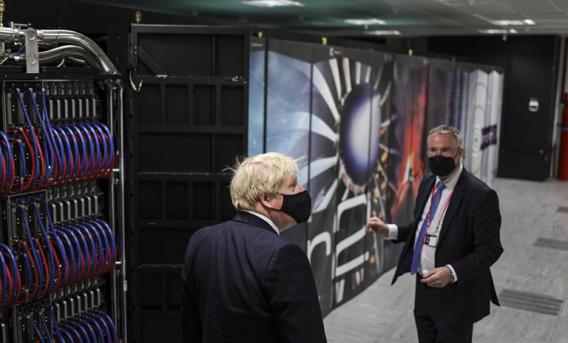
UK’s most powerful supercomputer on show for Prime Minister
Prime Minister Boris Johnson has visited the UK’s newest and most powerful supercomputer ARCHER2 during a tour of the University’s world-class data centre facilities.
Computing Insight UK: lots of computing, insights, and nice to be back meeting in person!
The annual Computing Insight UK (CIUK) conference focuses on the UK’s contribution to HPC. Held in Manchester over two days and with players from across UK academia and industry, it was a grea
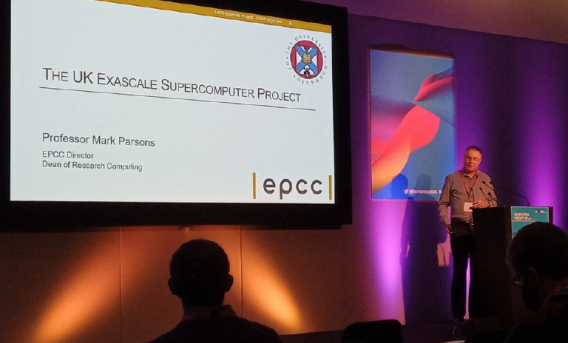
Investigating Rust and task-aware communication libraries
EPCC has started work on two technology state-of-the-art investigations, each of which will research and produce a report on a topic of interest to HPC application developers.

Hybrid parallel programming with tasks
This technical report by EPCC's Mark Bull and former EPCC MSc in HPC student Jiehong Yu gives an introduction to using a hybrid parallel programming model that combines MPI with OmpSs or OpenM

New study into the software and skills required for large-scale computing
This year the Software Sustainability Institute will be running a study to better understand the software and skills required for large-scale research computing.

EuroCC@UK: the UK’s National Competence Centre in HPC, HPDA and AI
EPCC leads EuroCC@ UK in collaboration with STFC Hartree. Both centres are drawing on their complementary expertise to deliver the programme’s goals.

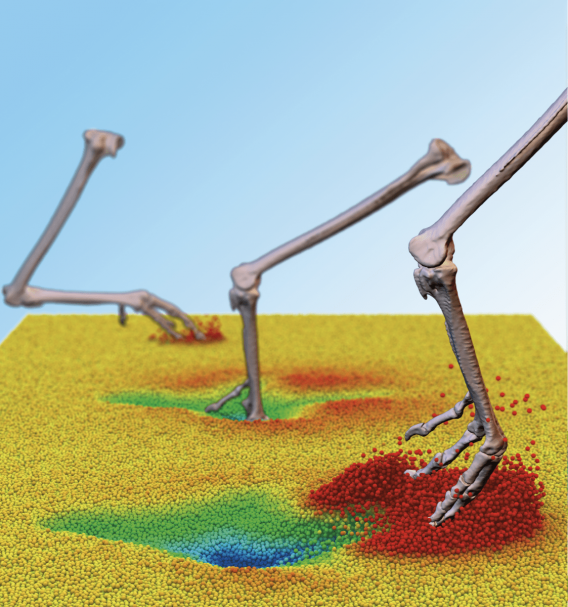
A brief history of the ARCHER2 Image and Video Competition
The competition gathers together some of the best images produced by users of the ARCHER2 UK national supercomputing service, which is hosted and managed by EPCC.
Two decades of MSc programmes at EPCC
Back in the late 1990’s we became aware of a need for postgraduate level training in high-performance computing (HPC) and parallel programming.

Enabling machine learning for exascale simulations
SiMLInt is an interface that increases the efficiency of machine learning (ML) techniques when solving large-scale physical simulations by consuming fewer resources without sacrificing precision.