I am an AI Metascience Fellow at EPCC, University of Edinburgh, exploring how AI is shaping disruptive science and influencing scientific norms in research on complex, “wicked” problems.

I am an AI Metascience Fellow at EPCC, University of Edinburgh, exploring how AI is shaping disruptive science and influencing scientific norms in research on complex, “wicked” problems.

I am interested in the role that novel hardware can play in future supercomputers, and am specifically motivated by the grand-challenge of how we can ensure scientific programmers are able to effectively exploit such technologies without extensive hardware/architecture expertise. My research combines novel algorithmic techniques for this new hardware, programming language & library design, and compilers. I coordinate knowledge exchange for the ExCALIBUR exascale software programme, and chair the RISC-V International HPC SIG. I head up EPCC's PhD programme and am course organiser for the in-person and online Parallel Design Patterns MSc modules.
I am currently undertaking a Royal Society of Edinburgh personal research fellowship.
I joined EPCC in March 2018 after completing my PhD in Physics at Heriot-Watt University. During my PhD I developed software for calculating the stationary state of dissipative many-body quantum systems using matrix product states. Since joining EPCC, my work has mainly focused on programming models for heterogeneous exascale computing, particularly through my involvement in the INTERTWinE and EPiGRAM-HS Horizon 2020 projects.
I now lead EPCC's Quantum Group.

I have been working at EPCC since 1998, mainly on the academic and HPC side of the Centre. Previously, I worked at the UK Met Office, and at the University of Manchester, where I also studied for a PhD in parallel numerical algorithms.
I am a Chancellor Fellow at the EPCC, University of Edinburgh, specializing in developing intelligent adaptive systems for data-intensive computing.

My primary interest is in mesoscale simulation methods for fluid dynamics, particularly the lattice Boltzmann method, and accelerating their implementations on parallel computers. With a background in computational physics, I am generally interested in applying HPC to scientific problems, particularly use of accelerators, performance portability, and software engineering. I also teach on EPCC’s MSc programmes.

I am a Chancellor’s Fellow within EPCC, where I work on accelerating high-fidelity simulations of marine energy systems through a combination of data-driven techniques and novel parallel computing strategies. My background is primarily in computational fluid dynamics (e.g. smoothed particle hydrodynamics, lattice Boltzmann method, high-order compact finite differences), but also includes high-performance computing, flow control, optimisation, uncertainty quantification and data-driven engineering. Aside from research, my main interests are travel and sport (both watching and participating). In particular, I am especially keen on rugby, football, triathlon (not so much the swimming) and golf, although I follow a few others as well.
I hold a BSc and MSc in Computational Mathematics and Computer Science. Since 2021, I have been pursuing my PhD at EPCC, focusing on AI-driven approaches to support metacognition through computer vision models and intelligent interventions. In 2025, I joined the UKRI’s MetaScience project with Dr. Rosa Filgueira at EPCC, which aims to track and evaluate innovative research ideas across the UK.

My interests are based around computational fluid dynamics and I have recently been closely involved with co-workers in the School of Physics in the development and implementation of novel lattice Boltzmann techniques for complex mixtures of fluids and particles.
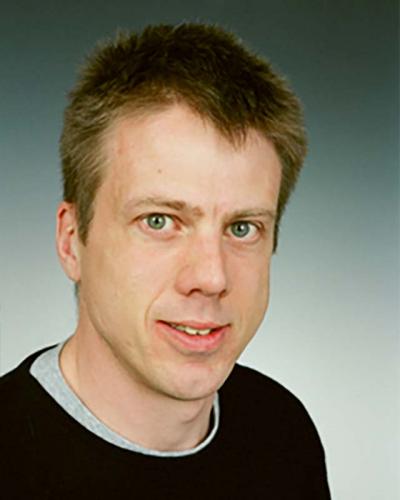
I joined EPCC in 2006 after studies in Medical Informatics (University of Heidelberg) and Computing (Napier University), and completing a PhD in Music & Artificial Intelligence at the University of Edinburgh. My main research interests are in the fields of energy efficiency in HPC, software performance analysis and optimisation, and novel hardware.